Losing weight while enjoying traditional Indian foods is entirely possible with a structured plan that focuses on calorie control, balanced nutrition, and portion management. This 7-day Indian diet plan is designed to help you shed fat, reduce bloating, boost metabolism, and feel energized throughout the day, all while keeping your meals flavorful and satisfying.
Disclaimer: Individual results may vary. Consult a healthcare professional before starting this plan, especially if you have medical conditions like diabetes, thyroid issues, or digestive disorders.
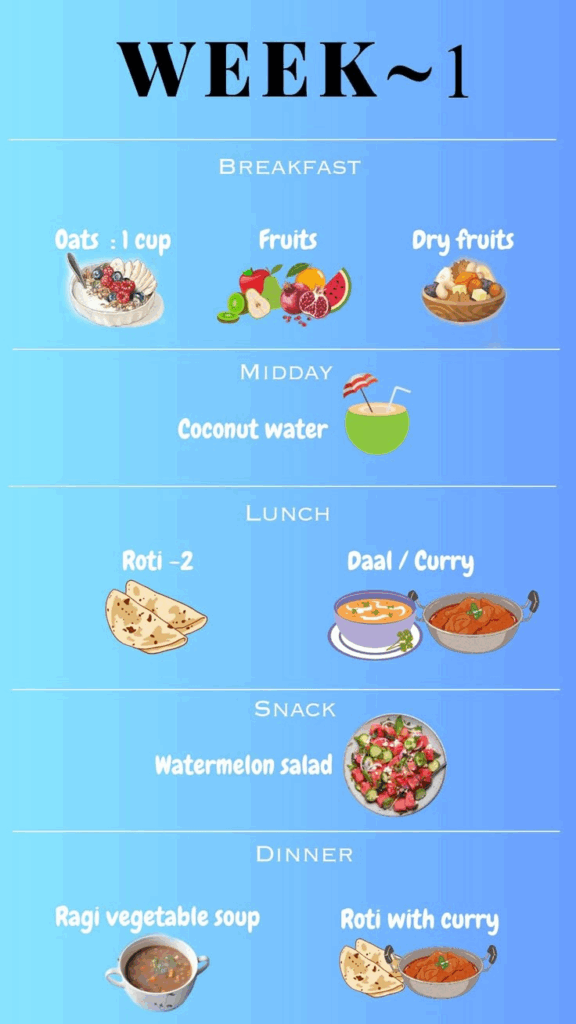
Principles of an Indian Weight Loss Diet
A successful weight loss diet emphasizes whole foods, high protein, fiber-rich vegetables, complex carbohydrates, and healthy fats. The goal is not just to cut calories but to provide sustained energy, reduce hunger pangs, and improve overall health. Indian diets can be naturally weight-loss-friendly if you focus on:
- Balanced meals: Include a combination of protein, complex carbs, and vegetables in each meal.
- High fiber intake: Lentils, legumes, vegetables, and whole grains aid digestion and keep you full.
- Healthy fats: Moderate amounts of nuts, seeds, and olive or mustard oil support hormonal balance.
- Controlled sugar and refined carbs: Limit sweets, white rice, white bread, and packaged snacks.
- Hydration: Drink 2–3 liters of water daily and include herbal teas for metabolism support.
- Portion management: Use small bowls and plates to avoid overeating.
7-Day Indian Diet Plan for Weight Loss
Day 1 – Fresh Start with Hydrating Foods
Start the week by consuming light, hydrating meals that flush out toxins and kickstart metabolism. Begin the day with warm water and lemon to aid digestion and boost energy. Breakfast can include moong dal chilla with a side of mint chutney or oats upma prepared with vegetables and minimal oil. For lunch, a bowl of mixed vegetable curry with 1–2 phulkas provides balanced protein and fiber. Evening snacks could include cucumber and carrot sticks or green tea with roasted chana. Dinner should be grilled paneer or tofu with steamed vegetables to keep the meal light and protein-rich.
Day 2 – High Protein & Fiber
On the second day, focus on high-protein foods that help preserve muscle while burning fat. Breakfast could be besan cheela stuffed with paneer or sprouted moong salad for protein and fiber. Lunch should consist of 1 cup cooked brown rice with dal and a side of sautéed greens. For snacks, buttermilk or roasted makhana can curb hunger. Dinner should emphasize protein — grilled chicken or soya chunks with sautéed vegetables works perfectly for vegetarians. Including green tea or herbal teas between meals helps boost metabolism.
Day 3 – Balanced Vegetarian Day
The third day combines complex carbs, protein, and fiber to maintain energy levels. Begin with a vegetable poha or oats and milk porridge. Lunch can include 1–2 phulkas with mixed vegetable sabzi and dal, while snacks could be a bowl of fresh fruit or sprouts salad. Dinner should remain light and satisfying, such as vegetable soup with a side of lightly sautéed paneer or tofu. This combination ensures satiety without excess calories and helps regulate blood sugar.
Day 4 – Low-Carb Indian Meals
The fourth day focuses on reducing simple carbohydrates while including sufficient protein and fiber. For breakfast, moong dal cheela or besan omelet with green chutney works well. Lunch should include grilled vegetables with tofu or paneer and a small portion of brown rice or quinoa. Snack on nuts, seeds, or herbal tea to keep energy stable. Dinner should be mixed vegetable soup with sautéed greens, providing nourishment without heavy carbs.
Day 5 – Protein & Healthy Carbs
On day five, include protein-rich foods along with complex carbohydrates for sustained energy. Breakfast could be idli with sambar or daliya porridge with nuts and seeds. For lunch, 1–2 chapatis with dal and vegetable curry are ideal. Snacks can include a small bowl of curd with fruits or roasted chana. Dinner should focus on grilled paneer or tofu with stir-fried vegetables and a small portion of brown rice, balancing carbs and protein while staying low-calorie.
Day 6 – Vegetarian Lean Protein Focus
Day six emphasizes plant-based proteins, ideal for vegetarians aiming for weight loss. Breakfast can be sprouted moong salad or tofu scramble with vegetables. Lunch should include mixed vegetable curry with 1–2 chapatis and a side of dal. Afternoon snacks like cucumber sticks with hummus or buttermilk help maintain satiety. Dinner should be grilled soya chunks or paneer with sautéed broccoli and spinach, keeping meals light, high-protein, and nutrient-rich.
Day 7 – Balanced Indian Diet
The final day focuses on stabilizing metabolism and providing complete nutrition. Breakfast could include oats idli with green chutney or a vegetable paratha with curd. Lunch should include brown rice with dal and a mix of cooked and raw vegetables, providing fiber, protein, and essential micronutrients. Snacks can include fruits, herbal tea, or roasted seeds. Dinner should be vegetable soup with paneer cubes or lightly sautéed tofu, ensuring a fulfilling but low-calorie end to the week.
Drinks to Support Indian Weight Loss
- Warm lemon water in the morning aids digestion and detoxification.
- Green tea 2–3 times a day helps in fat metabolism.
- Cumin water (jeera water) can improve digestion and reduce bloating.
- Buttermilk (chaas) aids gut health and provides protein.
- Cucumber-mint water keeps you hydrated and flushes toxins.
Additional Tips for Better Results
- Practice mindful eating; avoid distractions while eating.
- Walk at least 5,000–10,000 steps daily or do light yoga.
- Avoid late-night meals and minimize fried or processed foods.
- Ensure 7–8 hours of quality sleep to regulate metabolism.
- Track progress through measurements and clothing fit, not just scale weight.