Losing weight in just seven days is ambitious but achievable if you focus on high-intensity workouts, targeted exercises, and proper recovery. While short-term results are often a combination of fat loss, water weight reduction, and improved muscle tone, exercising strategically can help jumpstart a sustainable weight loss journey. The key is to combine cardio, strength training, core exercises, and flexibility routines to maximize calorie burn and enhance metabolism.
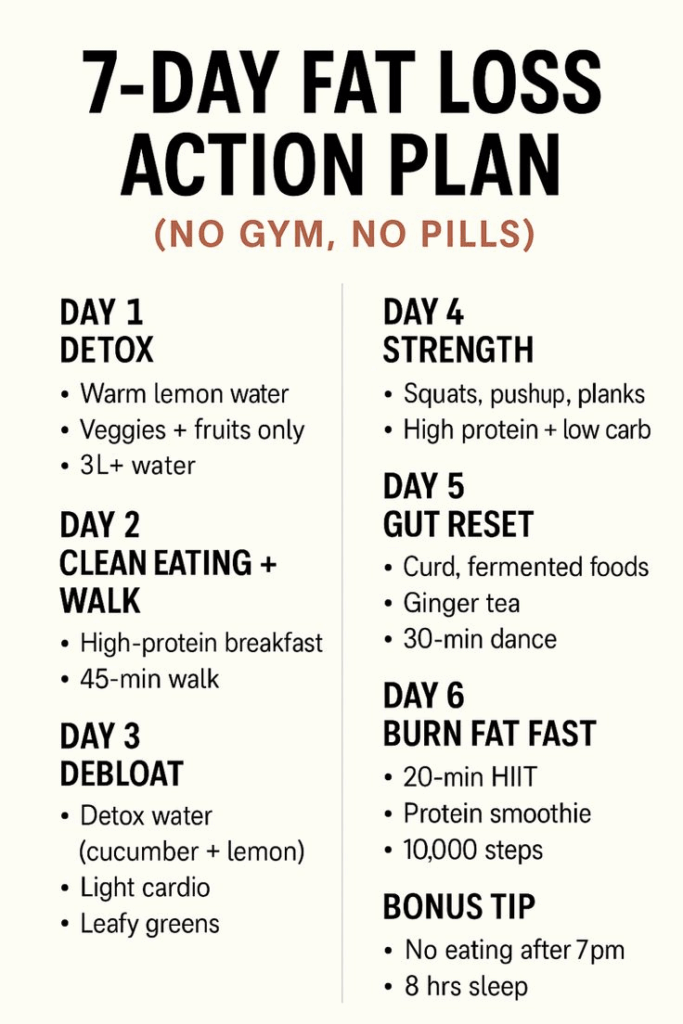
Principles of a 7-Day Weight Loss Exercise Plan
To achieve rapid results in a week, certain principles must be followed. First, consistency is essential: daily activity, even for 30–60 minutes, ensures your body maintains a calorie deficit. Second, high-intensity exercises such as HIIT or circuit training increase calorie burn both during and after workouts. Third, targeting multiple muscle groups through compound exercises helps tone the body while promoting fat loss. Finally, adequate rest, proper hydration, and balanced nutrition are critical for recovery, energy maintenance, and preventing injuries.
Day 1 – Full-Body Activation
The first day should focus on full-body activation to prepare the muscles and joints for the week ahead. Start with a warm-up of 10 minutes of brisk walking or light jogging. Follow with bodyweight exercises such as squats, lunges, push-ups, and planks, performing each for multiple sets. This combination engages the core, legs, and upper body, increasing heart rate and calorie burn. Finish the session with stretching to improve flexibility and reduce soreness. A balanced diet rich in protein and fiber will fuel recovery and keep energy levels steady.
Day 2 – High-Intensity Cardio
Cardiovascular exercise is essential for burning calories rapidly. On day two, focus on high-intensity cardio such as running, cycling, or swimming. Begin with a 5-minute warm-up, then alternate between 30 seconds of fast-paced sprints and 30–60 seconds of moderate-paced recovery. This interval approach, often referred to as HIIT, boosts metabolism and increases post-workout calorie burn. End with a 5–10 minute cooldown and stretches to relax muscles. Pairing cardio with protein-rich meals helps the body recover while maintaining energy for the next day’s workout.
Day 3 – Core Strength and Stability
A strong core improves posture, balance, and overall fat-burning efficiency. On the third day, incorporate exercises like planks, side planks, bicycle crunches, and mountain climbers. These exercises engage the abdominal muscles, obliques, and lower back, helping to tone the midsection while enhancing functional strength. Complement the core routine with light cardio, such as brisk walking or jump rope, to continue calorie expenditure. Proper hydration and balanced meals with lean protein and vegetables support muscle recovery and metabolism.
Day 4 – Lower-Body Sculpting
Day four focuses on lower-body exercises to tone the glutes, thighs, and calves. Squats, lunges, glute bridges, and step-ups should be performed in controlled repetitions, ensuring proper form to prevent injury. Adding light weights or resistance bands can increase intensity and promote muscle building. Concluding the session with a short cardio interval of 10–15 minutes enhances fat burn. Eating fiber-rich vegetables, lean protein, and whole grains on this day fuels recovery and supports sustained energy.
Day 5 – Upper-Body Strength and Cardio
The fifth day emphasizes upper-body strength combined with cardio to enhance calorie burn and sculpt arms, shoulders, and back. Push-ups, tricep dips, dumbbell rows, and shoulder presses target key upper-body muscles. Following these exercises with a 20–30 minute session of cardio, such as cycling or treadmill walking, ensures continued calorie expenditure. Consuming a balanced diet with lean protein and complex carbohydrates aids muscle repair and maintains energy levels for sustained workouts.
Day 6 – HIIT and Full-Body Conditioning
On day six, HIIT and full-body conditioning maximize calorie burn and challenge multiple muscle groups simultaneously. Exercises such as burpees, jump squats, high knees, and mountain climbers should be performed in intervals of high intensity followed by short rest periods. This approach increases heart rate, improves endurance, and accelerates fat loss. Ending with stretching or yoga helps reduce muscle tightness and enhances flexibility. Hydration and nutrient-dense meals support recovery and prevent fatigue.
Day 7 – Active Recovery and Flexibility
The seventh day is dedicated to active recovery and flexibility, allowing the body to rest while maintaining calorie burn. Activities such as yoga, Pilates, or a long brisk walk improve circulation, release muscle tension, and enhance mobility. Gentle stretching exercises reduce soreness and prevent injuries while supporting overall body alignment. Consuming balanced meals rich in fruits, vegetables, lean protein, and whole grains on this day ensures replenishment of nutrients and prepares the body for another cycle of intense workouts.
Supporting Factors for Rapid Weight Loss
To maximize results in seven days, exercise should be paired with proper nutrition, hydration, and lifestyle habits. Drinking 2–3 liters of water daily keeps metabolism efficient, improves digestion, and reduces water retention. Meals should focus on lean proteins, vegetables, whole grains, and healthy fats while avoiding sugary, processed, and fried foods. Adequate sleep of 7–8 hours is critical for recovery, hormonal balance, and energy maintenance. Combining consistent exercise with these habits ensures safe, effective, and sustainable weight loss.
Expected Results
By following this 7-day exercise plan diligently, individuals can expect noticeable improvements in energy, stamina, and body composition. Weight loss may range from 1 to 3 kilograms, depending on diet adherence, workout intensity, and individual metabolism. In addition to fat loss, participants can experience better muscle tone, improved cardiovascular health, enhanced flexibility, and increased confidence. This short-term plan serves as a strong foundation for long-term weight management and fitness goals.